Go deep, stay long

Dive Log

CDT Fourcault promo

by Dave Oldham on Jun.15, 2011, under Dive Log, Dive Travel, Technical Dives, U/W Photos

CDT Fourcault

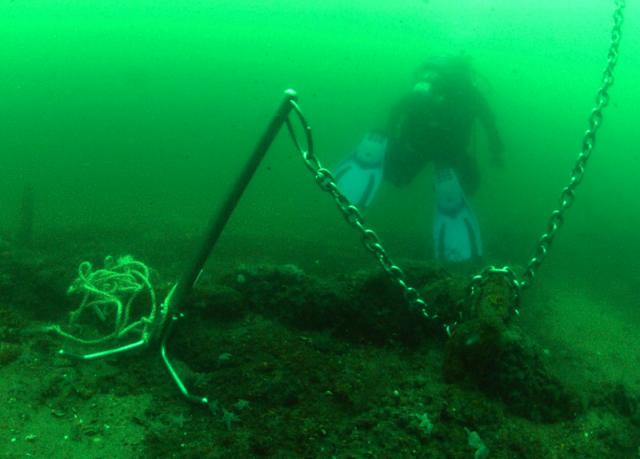
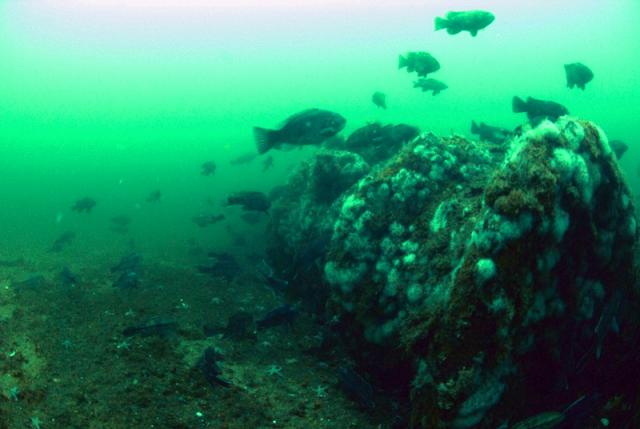
A while back, I spent some time on the CDT Fourcault diving shipwrecks of the North Sea. The trip was a blast, and I met some really wonderful divers. There were groups from Belgium, UK, USA, and Italy (actually only one diver from Italy). All were fine divers, and many great sea stories were told over the dinner table.

Since that time some of us have kept in touch, and exchanged photos and videos of the trip, and other dive events. The latest was a promotional video made for the vessel CDT Fourcault. There are clips from our trip, and even a shots of me.

5 Comments :, , more...

Diving Bonaire

by Dave Oldham on Feb.05, 2011, under Dive Log, Dive Travel, Surface Interval, Training, U/W Photos

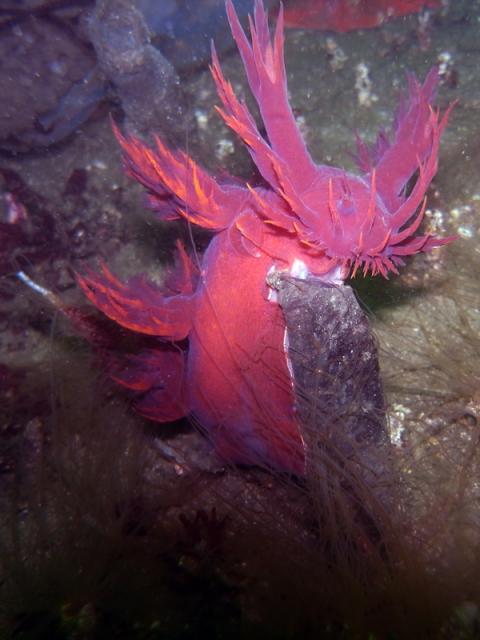
Flamingo snail

Flamingo snail

After a few weekends of being snowed in, I had the opportunity to work through my piles of photos and relate some memories (and pictures) of past trips.Val and I visited Bonaire on two separate trips. I’ve attached some shots of resort (Buddy Dive), and added a new gallery.

For those of you unfamiliar with Bonaire, it is 50 miles north of South America (Venezuela to be exact). The island part of the Nether Antilles. This location of the Caribbean is constantly swept by easterly trade winds. The east side of the island is subject to rough waves and the shoreline is rocky. The western side of the island is protected in the lea. Here is some of the best diving of the Caribbean.

Sunset over Kline

Sunset over Kline

The shore diving really is about as easy as it gets. The dock at Buddy Dive is only a few feet from the dive shop, and the reef is only a few fin strokes away. I spent the first day draining tank after tank poking around the reef. I was working with a new still camera, and practicing with the video housing. Surface intervals were only a quick stop for fresh tanks, batteries, or tape. The top of the reef is about 20 ft deep An Al 80 lasts quite a while at this depth, and decompression is impossible, especially on Nitrox. After 6 tanks, my wife dragged me out of the water for dinner.

The next day we got a map of the island and headed out in our pickup truck (provided with the suite). The west side of the island is rimed with a seemingly continuous reef. In some places it is a double reef with sand in between. On the shore, there are areas where you can park a your truck, gear up, and make an entrance. Some areas have docks and with ladders to facilitate access. These entrance sites have names, which are both on the map, and written on yellow stones along the side of the road.

xxx

Clearner shrimp on a butterfly

Our package included boat a few boat dives. These were mostly spent visiting Kline Bonaire. This is an uninhabited island to the west of Bonaire, also protected from the trade winds. Many of these dives were deeper as the slope to Kline was much steeper.

Many sections of the reef hold different microcosm and wild life. There are many web sites describing, so I’ll just point out some of the highlights. The Hilma Hooker is a shipwreck in the sand between a double reef. It’s a nice dive, and if you’re one of the first there, you will find a few large Tarpon hiding in the holds.

Salt Pier is where the dried sea salt is loaded onto ships. The structure of the pier seems to attract schools of fish, and event the shallows are full of life.

Fish to look for:

Eels: this is the one of the first times I’ve seen eels out hunting during the day.

Frog Fish: Another first for me. They are hard to spot, as their camouflage is nearly perfect.
Tarpon: They are huge, and will follow you on a night dive.

Sea horses: Ask your Dive Master where to find them.

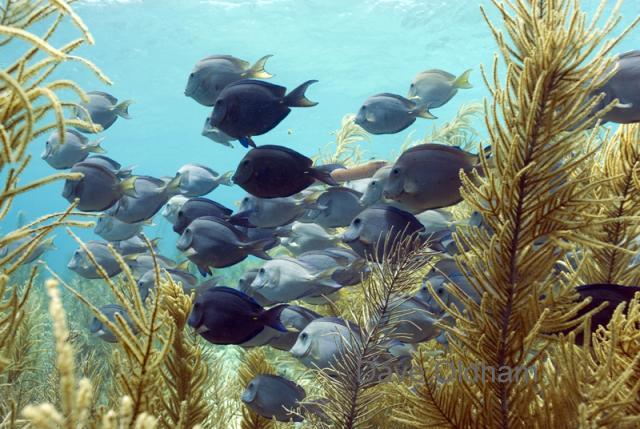
School of fish: There are so many fish, that sometimes you feel like one of the crowd

Spotted Eagle Rays: These majestic rays swim effortless and leave you breathless if you try to follow.

Dolphins: I’m not sure how often these appear, but on one day we got snorkel with them on the surface interval.

Leave a Comment :, more...

Manatee Excursion 2011

by Dave Oldham on Jan.13, 2011, under Dive Log, Dive Travel, U/W Photos

Is that my reflection?

Is that my reflection?

Val and I had the opportunity to join Becky and Dave on their annual winter manatee trip down to Crystal River, Florida.  We packed our gear and headed down to Tampa.  An hour later, we were pulling up to the hotel in Crystal River.  Over the last few years, I’ve had some great trips down to this area.  There’s been a load of training for myself, as well as my training others.   The caves and sinkholes are difficult to blow out, so it’s a good area for scuba training for deep dives.

This trip was just for fun.  We planned to dive with the manatees, then spend the weekend relaxing.    Unfortunately, the weather was not cooperative.  We left NJ just after a snowstorm.  This winter has been one of the coldest I remember.  Now that we were down in Florida, we were hoping for a little warmth.   No such luck.  Thursday morning was in the 30s with a bit of a breeze.

With the cooler conditions, Becky decided to keep the boat trip short, and head to King’s Springs.  The water clarity is not as good here, but the Manatees were active, and inquisitive.   While you were petting one manatee, another would come up behind you and nudge you for attention.  Staying in the water was the key to keeping warm.  During the entire day, there was steam rising off the surface.  Yes, it was quite cold when we got out.  After getting lots of photos, we headed back to the shore to warm up.  While it may have been cold, we had a lot of fun.

Sanctuary

Sanctuary

Val had filled her fun quota that day, and decided to head to Homosassa Spring Wildlife State Park on Friday.  Apparently this is a wildlife preserve that also provides wildlife rescue services.  There she found many animals that had been rescued, and were now recovering before release.

The weather caused a few cancellations on Becky’s next trip, so there was room for me to join them again.  Friday, the manatee excursion headed out to the Three Sisters Spring.  There is a large sanctuary area around the springs that was filled with manatees.   Most were quietly resting, but some would come out of the sanctuary and interact with the divers.  Speaking of divers, there were quite a few.  Probably because it was warmer, but also because it was Friday.  When we arrived there were 5 boats, and numerous kayaks.    With this many people I’m sure it can be overwhelming to the Manatees.  Everyone stayed away from the sanctuaries to give the manatees their space.  Most of our crew were experienced divers, and very calm and careful in the water.  This made the manatees more relaxed, and many freely interacted with us.

Becky and Camera

Becky and Camera

Back in the springs, the water was crystal clear and warm (72), but there were very few manatees, and they were resting.  (You can’t disturb them when they are resting.)  We got a few shots of the one or two in the springs, then headed back to the river where they were more active.

After several hours trying different photo techniques, angles, and subject, we headed back to the boat.  The ride back was much warmer this day.  We quickly got changed and headed out for some hot food to warm up.

Leave a Comment : more...

Class Photos, Fall 2010

by Dave Oldham on Dec.15, 2010, under Dive Log, Instruction, Technical Dives, Training, U/W Photos

Shooting a bag while maintaining buoyancy

Shooting a bag while maintaining buoyancy

This fall in the Northeast was a bad season for blowouts and poor visibility.  Several hurricanes passed by, stirring up the surf.  Often, this can help the conditions by mixing the surface water with the cooler water below the thermocline.  Unfortunately this fall it cleared out the plankton on the surface, then just stirred up the bottom into soup.  At this point, the surface had over 50 ft of visibility, but the bottom would drop to less than 5.  That’s on the days we could make it out.

On the plus side, this gave me the opportunity to drag some students up to Dutch and finish up classes.  Once most of the drills are done, I dragged the camera along to grab a few shots.   After this fall, I needed the practice or I’d forget how to work the housing.  Also, I’m playing with a new lenses/port combination that takes some getting use to.  For what it’s worth, here are some of the photos that came out well.

Leave a Comment :, , , , , more...

Notes on Diver Etiquette

by Dave Oldham on Nov.15, 2010, under Basic SCUBA, Instruction, North East Diving, Surface Interval, Tech / Advanced

The other day, I found myself in a discussion with a group of instructors and experienced divers over the issue of diver etiquette.  Everyone agreed that this varies wildly from diver to diver, and shop to shop.  While there is no explicit place for this discussion in the training curriculum, it is a subject that should be brought up.   We all agreed the best time to teach this is as part of the Open Water class (teach good habits before divers learn bad ones).  Many of us do include a few minutes to discuss this in class, then try to reinforce the concept during the open water dives.

Unfortunately, there are other instructors that do not understand the need, do not have the time, or just have bad etiquette themselves.

Ultimately, a diver’s etiquette will reflect their own personality.   A diver that only thinks of them self, will never follow good etiquette.   Someone that is considerate of others will try their best to be considerate while diving.  However, many of the latter do not know how to do this as new divers.  Here are some points to consider.

  1. On the surface:
    In many dive locations, gear space is limited.  This is especially true on dive boats.  Being conscience of this and trying to minimize the space we use is good etiquette.  Here are some points to consider on a dive boat.  These points also apply to other dive sites, but boats are usually the most space limited.

    • Gear boxes and bags. Try to keep gear containers no larger than necessary.   Try to bring containers that fit neatly under benches.  Divers showing up to a boat with over sized bags or too many bags are being inconsiderate of others, and will often get glares or rebuke from the crew. I recommend three containers:
      1. One for the BC and dry / wet suit
      2. A small one for dry gear.  A backpack works for me  (phone, towel, snacks, a few spare parts …),
      3. A small crate (about the size of a milk crate) for misc Scuba gear (reel, lift bags, lights… with fins on top)
    • This configuration works well in most environments of the North East.  On a boat, the crate  should fit well under the bench where you are setting up your tanks.  The drysuit goes in a dry location until needed.  The backpack is always in a dry location.
    • Put gear away promptly. Once your gear is loaded, set up your tank and stow your gear neatly out of the way.  The same is true after a dive.   As you take your gear off put it back into your crate and stow it neatly out of the way.  Not only is this good etiquette, but it can prevent gear damage or loss on a busy deck.
    • Dive Planning: Keep in mind that your not the only one on the boat. I recall several occasions where the entire boat was waiting over half and hour for one customer to finish his dive. If you plan on doing longer dives, then try to get into the water quickly.
    • Clean up after yourself: It’s amazing to see how much debris is left after the divers remove their gear from a dive boat. Half empty water bottles, cans, partially eaten bags of food … Yes, the crew will clean the boat, but all of this is in everyone’s way during the trip too.
  2. Gearing Up This is a process that takes up both space, and time. Here are some items to consider when working to don our gear in limited space.
    • Timing: If you know that you take longer than others to gear up, then either start gearing up early, or wait for others to go first.
    • Lend a hand: If you decide to wait for the diver next to you, then give them a hand.  That way they are out of your way quicker.
    • Be self sufficient:  This takes some time to learn, and practice. Most boat crews are eager to help in any way they can. However, there are often a lot of divers gearing up at once. Before strapping on tanks, prep the gear so that it is in reach as you don your kit. Watch an experienced crewmen.  Most can gear up with no assistance.   Again, it’s not that assistance is unavailable, but if you need lots of help, then you’re preventing other divers from getting any.
  3. Underwater: This can be difficult, since it’s not easy to know where other divers are in relation to yourself.  However, here are a few items to keep in mind.
    • Look around you. There may be other divers near you that you’re not expecting.   This is especially true on or near the up-line.  Be careful of your finning when you know other divers are near.  Fin slowly until you know your not going to kick a fellow divers.
    • Steer clear of classes. If you see an instructor working with a class, try to keep a reasonable distance.  Otherwise, you may confuse and distract the students from following their instruction.   Also, additional divers in close proximity makes it difficult for the instructor trying to keep watch over his students.
    • Photo ops: This is more of an issue in warm water diving, but keep in mind that other divers may want to take a picture also.  I’ve had video footage ruined by a diver sticking his fin in view while recording.  On the other hand, I try not to take too long, and let the next photographer get a chance.
    • Reels: Keep your line reel low and secure.  On several dives, the wreck looked like spider web with lines draped here and there.  Near the up-line it’s important to tie your reel low and put wraps close to the wreck.  A line 10 ft off the wreck can become an entanglement hazard as it is out of an approaching divers view.  When passing across another line, pass your line underneath.   Assuming your on your way out, the other diver should be on his way back before you, and will not be delayed by your line.

Conclusion:

Again, many of these points apply anywhere, not just to dive boats.  Any time space is limited, we need to work to make maximum use of it.

These were some of the points our group discussed.  Let me know if you have others.

8 Comments :, , more...

Looking for something?

Use the form below to search the site:

Still not finding what you're looking for? Drop a comment on a post or contact us so we can take care of it!